How to Avoid Online Shopping Scams (Steps to Follow)
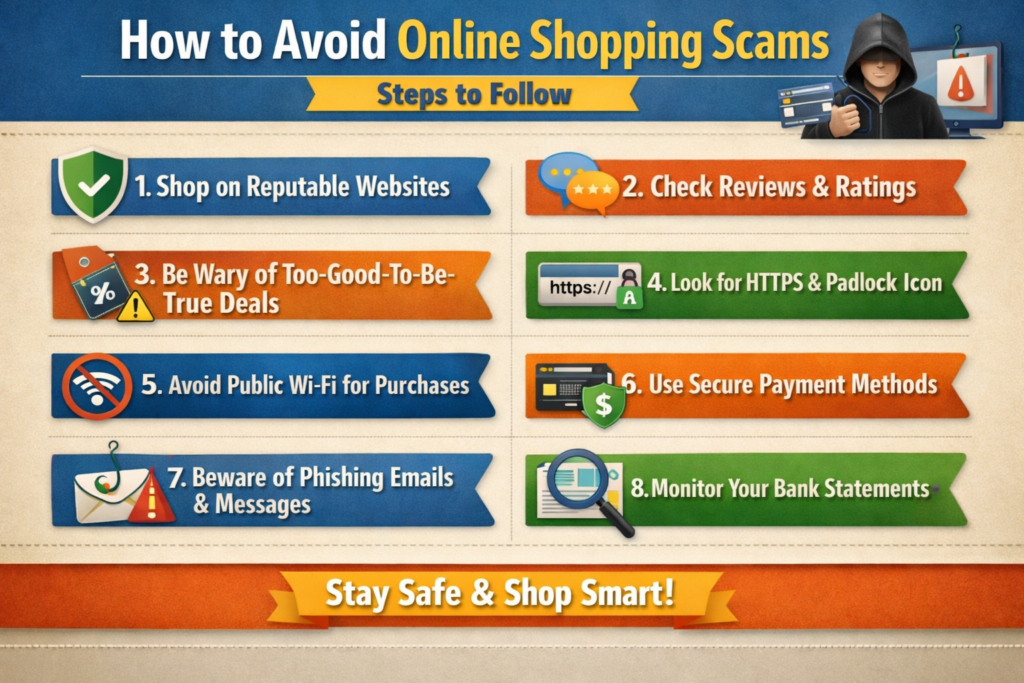
Online shopping has transformed how we buy everything — from groceries and gadgets to clothes and gifts. With just a few clicks, products arrive at your doorstep. But here’s the uncomfortable truth: scammers love online shopping just as much as buyers do. As e-commerce grows rapidly worldwide, cybercriminals are building smarter and more convincing traps for unsuspecting shoppers.
Recent data shows global e-commerce fraud losses reached $48 billion in 2025, and experts predict this number could exceed $107 billion by 2029. At the same time, organized cybercrime networks are creating thousands of fake online stores using automated tools and AI-generated content to trick buyers.
So the real question isn’t whether scams exist — it’s how you protect yourself while shopping online.
This guide walks you through practical, real-world steps to avoid online shopping scams, explained in simple language so anyone can follow them confidently.
Understanding Online Shopping Scams
Online shopping scams happen when fraudsters pretend to be legitimate sellers or brands to steal money, payment details, or personal information. Sometimes you never receive the product. Other times, the scam is deeper — your banking or identity information gets compromised.
What makes these scams dangerous today is how professional they look. Fake websites now copy logos, layouts, and checkout systems almost perfectly. Many even run advertisements on social media to appear authentic.
The growth of digital commerce has opened massive opportunities for criminals. Online retail represented less than 5% of global retail sales in 2010 but surpassed 15% by 2023, creating a huge playground for fraudsters.
Why Online Shopping Fraud Is Increasing
The rise isn’t accidental. Several factors are driving the explosion of scams:
- AI tools help scammers create fake websites in minutes.
- Consumers shop more frequently online.
- Fake ads reach millions instantly.
- Data breaches supply criminals with stolen identities.
A 2026 cybersecurity report revealed fraud operations can now be launched in under five minutes using AI, compared to 16 hours previously. That means scams appear faster than ever before.
Common Types of Online Shopping Scams
Understanding scam types makes them easier to detect:
- Fake e-commerce websites selling discounted items
- Phishing emails pretending to confirm orders
- Social media ads linking to counterfeit stores
- Account takeover fraud
- Payment redirection scams
Many victims fall because scammers exploit emotions — excitement, urgency, or fear of missing a deal.
Warning Signs of Fake Online Stores
Before learning prevention steps, you must recognize danger signals. Think of these as the “red flags” your brain should automatically notice.
Unrealistic Discounts and Urgency Tricks
If a premium product is selling for 80% off everywhere except official stores, pause immediately. Fraudsters commonly advertise deals that feel irresistible because urgency reduces rational thinking.
Security experts warn that offers appearing “too good to be true” are among the most common scam tactics used to capture payment details.
Scammers often add countdown timers or messages like:
- “Only 3 items left!”
- “Sale ends in 10 minutes!”
- “Exclusive today only!”
These are psychological triggers designed to rush your decision.
Suspicious Website Design and URLs
Fake websites frequently contain subtle errors:
- Slight spelling changes in domain names
- Missing contact information
- Poor grammar
- No return or refund policies
Typing website URLs manually instead of clicking ads helps avoid “typosquatting” — fake domains that mimic real brands.
Step-by-Step Guide to Avoid Online Shopping Scams
Now let’s move into the actionable part — the exact steps smart shoppers follow.
Step 1 – Research the Website Before Buying
Treat unknown websites like strangers asking for money — verify first.
Search for:
- Customer reviews
- Scam warnings
- Business history
- Social media presence
Even a quick Google search can reveal whether others were cheated. Many scam sites disappear after a few weeks, leaving behind complaints and negative reports.
Step 2 – Check Website Security Indicators
Always confirm basic security signs:
- HTTPS in the URL
- Padlock icon in browser
- Secure checkout page
These indicators don’t guarantee safety, but their absence almost guarantees danger.
Also check privacy policies and shipping details. Legitimate stores clearly explain customer rights.
Step 3 – Use Safe Payment Methods
Payment choice can decide whether you recover money after fraud.
Best options:
- Credit cards
- Trusted payment gateways
- Digital wallets with buyer protection
Credit cards provide stronger fraud protection because they are not directly linked to bank funds.
Avoid:
- Direct bank transfers
- UPI requests from unknown sellers
- Cryptocurrency payments
Scammers prefer irreversible payment methods.
Step 4 – Avoid Public Wi-Fi Purchases
Shopping on public Wi-Fi is like speaking your bank details loudly in a crowded room. Hackers can intercept data on unsecured networks.
Cybersecurity experts recommend shopping only on private, password-protected networks to prevent data theft.
Step 5 – Verify Seller Information
A genuine business provides:
- Physical address
- Customer support number
- Email contact
- Clear policies
If contact details look fake or incomplete, walk away immediately.
Step 6 – Read Reviews Carefully
Not all reviews are real. Look for patterns:
- Repeated wording
- Only positive feedback
- Recently created accounts
Balanced reviews with both pros and cons usually indicate authenticity.
Step 7 – Protect Your Personal Data
Never share unnecessary details like:
- OTP codes
- Full ID numbers
- Banking passwords
Using unique passwords for each account prevents hackers from accessing multiple platforms if one account is compromised.
Step 8 – Enable Banking Alerts
Transaction alerts act like a security alarm for your money. Instant notifications help you detect unauthorized payments quickly.
Banks and credit services increasingly offer fraud monitoring tools that alert suspicious activity instantly.
Advanced Safety Strategies Smart Shoppers Use
Basic precautions help, but experienced online shoppers go further.
Using Password Managers and MFA
Multi-factor authentication (MFA) adds another verification layer beyond passwords. Even if hackers steal login credentials, they still cannot access accounts without secondary verification.
Password managers also create complex passwords automatically, reducing human error.
Think of MFA as locking your house with both a key and fingerprint — double protection.
Monitoring Transactions Regularly
Checking bank statements weekly may sound old-fashioned, but it’s extremely effective. Fraud often begins with small test transactions before large thefts occur.
Early detection dramatically increases the chances of recovering lost funds.
What To Do If You Get Scammed
Even cautious shoppers can become victims. Acting quickly makes a huge difference.
Immediate Actions to Reduce Loss
If you suspect fraud:
- Contact your bank immediately.
- Freeze or block your card.
- Change passwords.
- Screenshot evidence.
- Cancel suspicious orders.
Speed matters because scammers transfer money quickly across accounts.
Reporting Online Shopping Fraud
Report scams through:
- National cybercrime portals
- Local police cyber cells
- Payment providers
- Marketplace support teams
Authorities worldwide emphasize public reporting because it helps identify organized scam networks faster.
Future of Online Shopping Security
AI-Powered Scams and How to Stay Ahead
Cybercrime is evolving rapidly. Experts warn that AI-generated scams are becoming highly personalized, using deepfakes and automated messaging to build trust with victims.
Fraud is increasingly industrialized — criminal groups now operate like companies with tools, templates, and customer-service-style scam systems.
The best defense moving forward isn’t fear — it’s awareness. Technology will continue changing, but human caution remains the strongest protection.
Conclusion
Online shopping is incredibly convenient, but convenience should never replace caution. Scammers succeed not because people are careless, but because fraud tactics constantly evolve to look normal and trustworthy.
By researching websites, using secure payments, protecting personal information, and staying alert to red flags, you dramatically reduce your risk. Think of safe online shopping like crossing a busy road — simple habits such as looking both ways prevent most accidents.
Every smart decision you make online builds a habit of digital awareness. And in today’s world, awareness is your strongest cybersecurity tool.
FAQs
1. What is the most common online shopping scam?
Fake e-commerce websites offering huge discounts are currently the most common scam method used worldwide.
2. Can I get my money back after an online shopping scam?
Yes, especially if you paid using a credit card or protected payment method and report the fraud quickly.
3. Is HTTPS enough to trust a website?
No. HTTPS only encrypts data; scammers can still create secure-looking fake websites.
4. Are social media shopping ads safe?
Some are legitimate, but many scams originate from paid ads. Always verify the seller independently.
5. How do scammers create fake online stores so quickly?
Modern tools and AI allow criminals to clone websites and launch scam stores within minutes.